deus ex machina : DEH-oos ex MA-kee-na
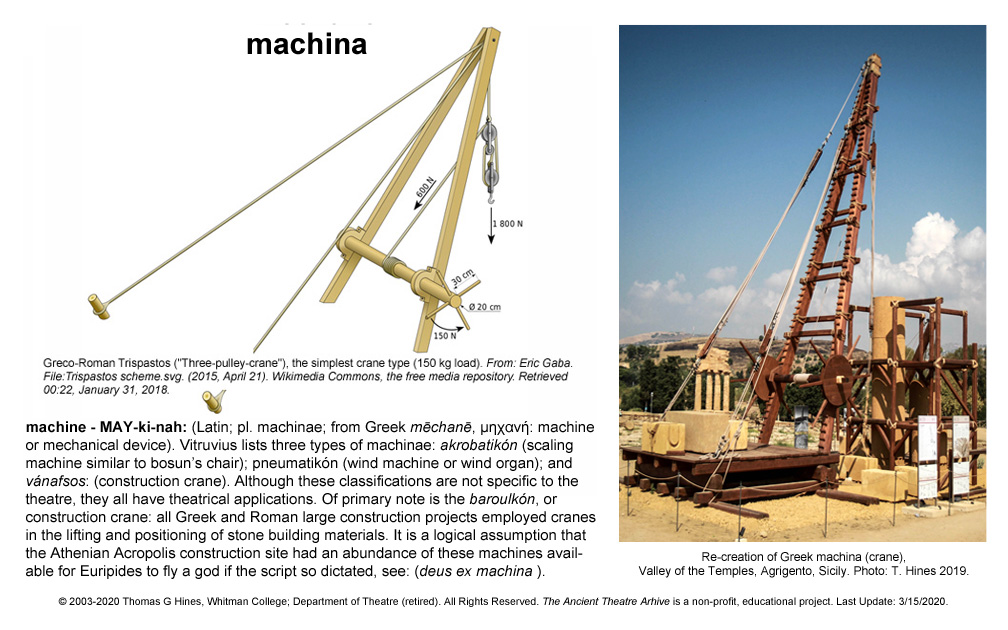
(Literally “God from machine.” Late 17th cent.: modern Latin, translation of Greek theos ek mēkhanēs, ‘god from the machinery’). A Greek theatre convention where a deity is flown to the stage from above or raised from below using a machine, (mēchanē), to solve a problem. A contrived solution to remedy an apparently insoluble plot issue. Convention from 5th century BCE playwrights Aeschylus, Sophocles, and Euripides and described by Aristotle (Poetics) and Pollus (Onomasticon). Various Greek and Roman crane machines are described by Vitruvius (De Architctura), but none are specific to the theatre. A team of engineers from the University of Patra is investigating stone slots in the earth behind the scene house at the Theatre of Phlius, Corinthia. They speculate these may have been sockets for a crane base. No other extant evidence to support the design.